Computational Neuroscience
计算神经科学Computational models of cognition and neural systems — how structure in high-dimensional behavioral and biological data can be captured, interpreted, and generalized.
Undergraduate at Princeton University studying Neuroscience, with minors in Cognitive Science and French. My research sits at the intersection of neuroscience, machine learning, data science, and computational biology — using computational models to understand complex biological and cognitive systems, from human reasoning and educational measurement to genomic regulation and scientific discovery.
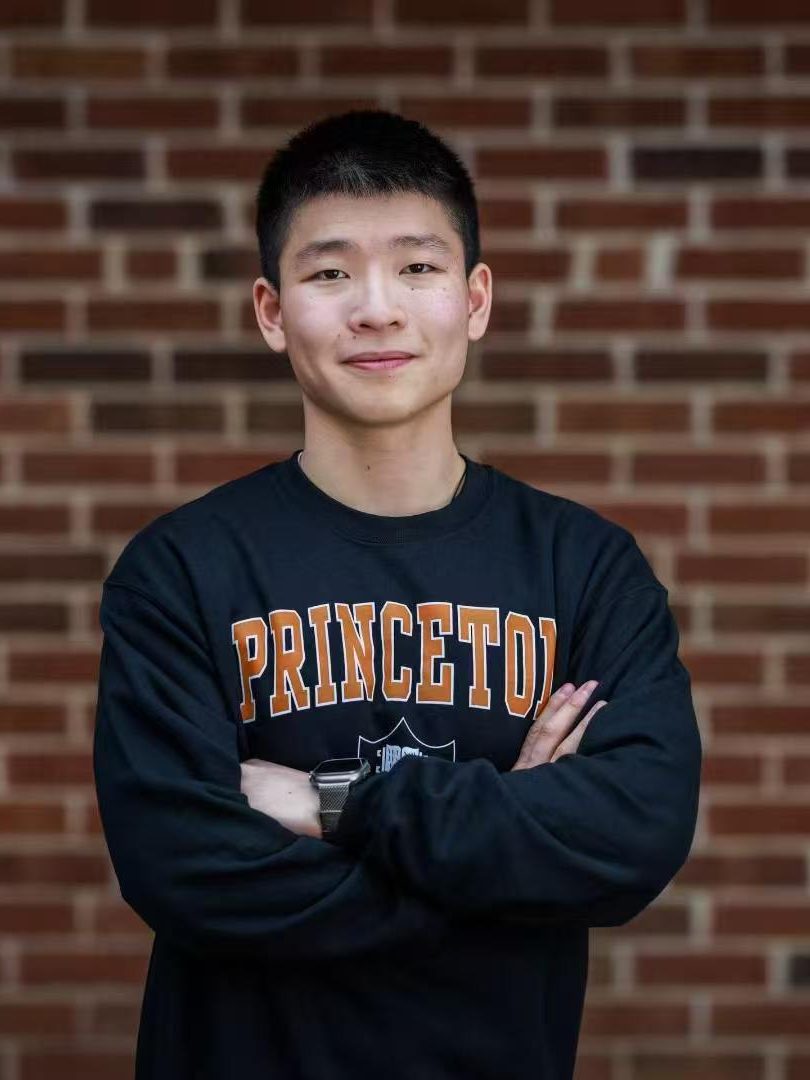
I am an undergraduate at Princeton University studying Neuroscience, with minors in Cognitive Science and French. My research sits at the intersection of neuroscience, machine learning, data science, and computational biology — with a particular interest in how computational models can help us understand complex biological and cognitive systems, from human reasoning and educational measurement to genomic regulation and scientific discovery.
Across my work, I use machine learning and deep learning as a common language for interdisciplinary research. My experience spans natural-language processing, automated assessment, multimodal data analysis, computational genomics, sequence modeling, and large-scale model evaluation. I am particularly interested in generalization beyond familiar training distributions, interpretable modeling, and reproducible scientific experimentation.
My research interests developed around a common question: how can computational models capture meaningful structure in complex human and biological systems? Early work in educational measurement examined AI-generated writing, automated scoring, and differences between human and machine judgment. These projects led to broader questions about representation, robustness, interpretability, and generalization — questions I now pursue across computational genomics, neuroscience, and machine learning.
Computational models of cognition and neural systems — how structure in high-dimensional behavioral and biological data can be captured, interpreted, and generalized.
Deep-learning pipelines for genomic sequence modeling and molecular phenotype prediction, with an emphasis on generalization and rigorous benchmarking.
Deep learning, representation learning, and model evaluation — with a focus on generalization beyond familiar training distributions and interpretable modeling.
Machine learning on multimodal data to study human behavior and communication — quantitative analysis of behavior, language, and social interaction.
Automated essay scoring, generative-AI text detection, and psychometric analysis — accurate, transparent, and fair assessment systems.
Careful model benchmarking, robust evaluation, and reproducible scientific experimentation across all of my research directions.
Machine learning and multimodal data for human behavior and communication on social media — contributing annotated training data and identifying behavioral, linguistic, and contextual features for computational analyses of online discourse and social interaction.
Deep-learning pipelines for genomic sequence modeling and molecular phenotype prediction, with an emphasis on model generalization and rigorous benchmarking in GPU-based computational research environments.
Automated essay scoring, generative-AI text detection, and educational measurement — transformer- and LLM-based approaches, text summarization, linguistic features, and ensemble methods, presented at IMPS, NCME, and other international venues.
Official note taker for Professor Christiane Fellbaum’s freshman seminar Evolution of Human Language — producing structured and accessible academic notes that synthesize linguistic theories, empirical findings, and classroom discussions.
For research collaboration, internships, or any questions about my work.
Professional profile and experience.
Full publication record with citations.
Perspectives and updates on jack-hua.com; stable author identifier on ORCID.
I am actively seeking research and internship opportunities in computational neuroscience, educational measurement, and AI for science — I would love to connect.